Looking at Matthews and wondering which part of town actually fits your life? That is a smart question, because Matthews is not just one uniform suburb. If you are comparing commute options, home styles, and day-to-day convenience, the right pocket can make a big difference. This guide will help you understand how Matthews is laid out, what each area tends to offer, and how to narrow your search with more confidence. Let’s dive in.
Why Matthews Stands Out
Matthews sits between Charlotte and Union County, and that location shapes a lot of what buyers experience. It has a small-town core, a broad ring of suburban neighborhoods, and a smaller number of denser or newer infill communities.
The town’s housing assessment shows that Matthews is still mostly a single-family market. About 62.6% of housing units are single-family detached homes, compared with 29.7% apartments and 5.7% townhouse, duplex, or condo units. The same assessment reports a mean year built of 1991, a 74% owner-occupancy rate, and no high-rise apartment buildings.
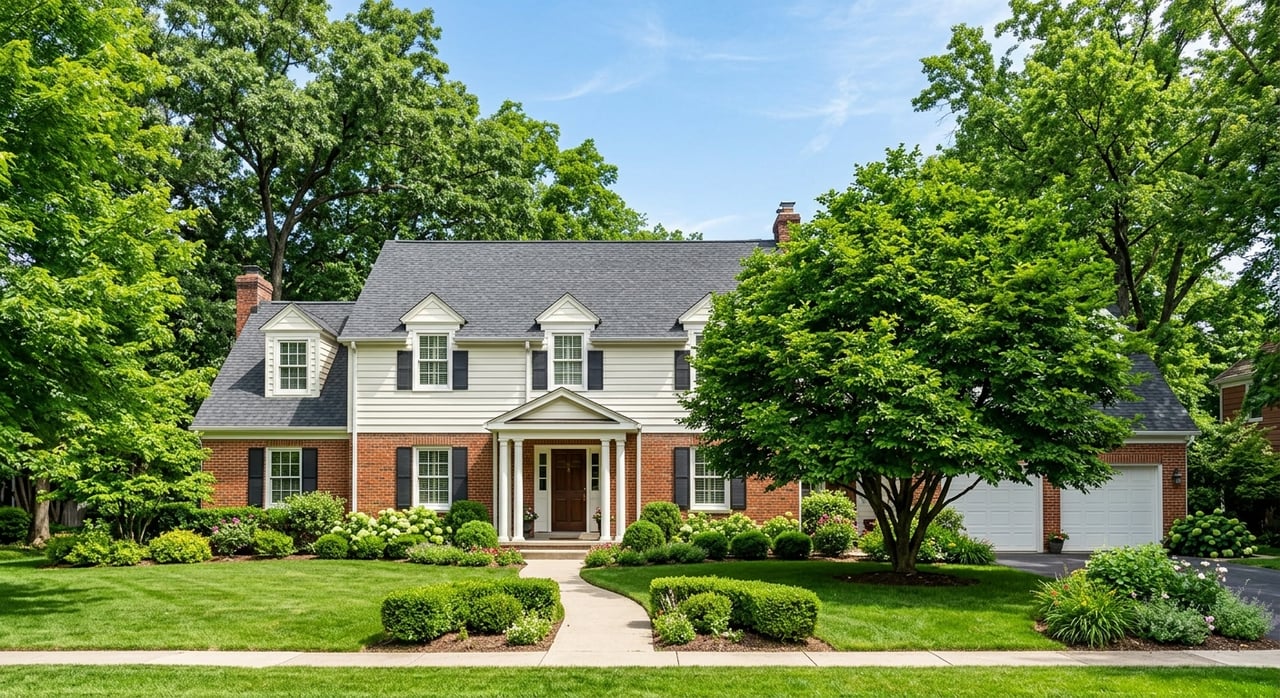
For many Charlotte-area buyers, that means Matthews often feels more established than some fast-growing suburban areas. Most homes have three to four bedrooms, and the town’s housing mix tends to support buyers looking for either a classic detached-home neighborhood or a more compact, lower-maintenance option in select pockets.
Matthews Neighborhood Patterns
A helpful way to think about Matthews is through three broad residential patterns. The town’s planning documents point to an historic downtown edge, established detached-home subdivisions, and a smaller set of newer or higher-density communities.
That framework matters because your experience can change a lot from one part of town to another. A home near downtown Matthews may offer easier access to events and trails, while a home near major corridors may trade that for quicker highway access or newer housing formats.
Downtown Matthews And West John
If you want character and a more traditional street pattern, start here. The downtown area includes the National Register Commercial Historic District, Town Hall, the library, and Matthews Station, while the Cultural Arts district includes the Matthews Community Center, Fullwood Theater, McDowell Arts Center, and Stumptown Park.
West John stands out for its concentration of 19th- and early-20th-century homes. Some of those properties have been converted to commercial use, while others remain private residences. This part of Matthews tends to appeal to buyers who value charm, local identity, and easier access to downtown activity over a brand-new subdivision feel.
Downtown is also one of the town’s biggest lifestyle anchors. The town highlights Renfrow Hardware, a 120-year-old store, the Matthews Farmers Market, the train depot and visitor center, the Matthews Heritage Museum, the Historic Reid House, Matthews Playhouse, the public library, the Sportsplex, and frequent events.
Crestdale And Heritage Access
Crestdale is closely connected to the town’s history and trail network. The Matthews Heritage Trail: Historic Crestdale begins behind Town Hall and the library, runs through Historic Crestdale, and connects to Four Mile Creek Greenway at John Street.
The town describes Crestdale as one of the oldest African American communities in North Carolina. For buyers, this area is worth understanding not just for its location near downtown, but also for its connection to Matthews history and greenway access.
If you are hoping for a neighborhood setting with close ties to downtown amenities, trails, and a smaller-scale street layout, this pocket may be worth a closer look. It tends to fit buyers who care about place, context, and connectivity within the town core.
John Street And Independence Corridor
This is one of the most distinct housing pockets in Matthews. The town’s housing assessment identifies the highest-density part of Matthews between John Street and Independence Boulevard, especially around Bellasera and nearby apartment and townhome clusters.
Examples on the town’s neighborhood map include Bellasera, Matthews Commons, Matthews Gateway, Matthews Square, and Town 324 Apartments. There is also a notable multifamily cluster at Independence Boulevard and Matthews-Mint Hill Road.
For buyers, this area is often the practical choice if you want lower-maintenance living or a more compact housing option. At the same time, it is smart to weigh the tradeoffs, since this corridor is also more likely to bring traffic, active road projects, and ongoing change.
Established Matthews Subdivisions
If your goal is the traditional Matthews suburban feel, this is usually the heart of the search. The official subdivision map includes long-standing neighborhoods such as Sardis Forest, Sardis Plantation, Matthews Estates, Matthews Glen, Fullwood Station, Gray Gate, Windsor Chase, Wyndmere, Forest Brook, and Forest Ridge.
The housing assessment notes that the easternmost and westernmost named subdivisions are exclusively single-family, and that almost all development south of I-485 is single-family as well. That reinforces the broader picture of Matthews as a detached-home town first, with higher-density housing concentrated in smaller areas.
For many buyers moving from other parts of Charlotte, these neighborhoods offer the clearest version of Matthews’ established residential identity. You may find that this part of town best matches your search if you want more detached-home inventory and a familiar suburban neighborhood layout.
South Of I-485 And Newer Edges
South of I-485, the housing picture shifts a bit. The town specifically identifies Harmony Hills and McKee Farms as townhome communities, and notes that these communities are not served by transit.
The subdivision map also shows newer or planned communities in the broader southern and eastern areas, including Bexley at Matthews, Glendevon at Matthews, Village at Windrow, Matthews Reserve, Matthews Gateway, and Matthews Commons. These areas may appeal to buyers who want a more recent development pattern or a location shaped more by highway access.
This part of Matthews can be a strong fit if your routine depends on getting in and out by car. It is usually a weaker fit if your top priority is a more walkable, downtown-adjacent lifestyle.
Amenities That Shape Your Search
In Matthews, neighborhood choice is not just about the house. It is also about how close you want to be to the places that shape everyday life.
One of the biggest assets is Four Mile Creek Greenway. This joint Town of Matthews and Mecklenburg County project includes 2 miles of paved trail, several neighborhood access points, and connections to the Matthews Community Center, Matthews Elementary, Fountain Rock Park, Squirrel Lake Park, the Heritage Trail, and the Sportsplex.
The Matthews Heritage Trail adds another 1.5 miles and connects Town Hall and the library with Historic Crestdale and Four Mile Creek Greenway. Purser-Hulsey Park adds 4.4 miles of biking and hiking trails, which gives buyers even more ways to think about recreation access by location.
The Matthews Community Center is another local landmark that shapes the feel of nearby areas. The town says it opened in 1907 as Matthews’ first public school and now houses programming and Fullwood Theater, blending history with everyday community use.
Commute Reality In Matthews
A Matthews address alone does not tell you enough about your likely commute. The road network matters a lot here, especially around US-74, I-485, John Street, and Matthews Township Parkway.
NCDOT describes U.S. 74 as the main gateway to Uptown Charlotte from southeast Mecklenburg and northwest Union County. The I-485 Express Lanes opened to traffic on February 28, 2026, and the project includes improvements at the East John Street interchange in Matthews.
NCDOT also says the Monroe Expressway is an all-electronic toll road from U.S. 74 near I-485 in Mecklenburg County to U.S. 74 between Wingate and Marshville. For some regional commuters, it offers projected time savings of about 20 minutes for trips from Marshville to Matthews.
Inside town, change is also underway. The Town of Matthews says NCDOT developed plans to widen a section of East John Street from the I-485 interchange through downtown, and the town received a 2026 grant to improve safety and mobility along 1.4 miles of East and West John Street. The Walk Matthews pedestrian plan also launched in May 2026 to identify sidewalk gaps and guide future pedestrian investments.
How To Choose The Right Pocket
The best Matthews neighborhood for you depends on what you want your daily life to feel like. Instead of asking which area is “best,” ask which one best matches your priorities.
Here is a simple way to frame it:
- Want historic character and downtown access? Focus on downtown Matthews, West John, and Crestdale.
- Want lower-maintenance living? Look closely at the John Street and Independence corridor.
- Want detached-home inventory? Spend time in the established subdivision belt.
- Want a newer-edge or highway-oriented location? Explore areas south of I-485 and along the eastern gateway corridor.
When you tour Matthews, pay attention to more than just finishes and price. Notice street pattern, access to trails and downtown, road noise, and how close you are to the routes you will actually use every day.
Matthews often appeals to buyers because it balances a preserved town center with a broader suburban housing base. That mix gives you real choices, but it also means the right strategy starts with matching the neighborhood pocket to your routine, not just the home to your budget.
If you want help narrowing your Matthews search, comparing neighborhoods, or figuring out which part of town best fits your commute and lifestyle goals, Jonathan Winn is here to help with local, thoughtful guidance.
FAQs
What types of homes are most common in Matthews for Charlotte-area buyers?
- Matthews is primarily a single-family detached housing market, with 62.6% of housing units in that category according to the town’s housing assessment.
Which Matthews areas are closest to downtown amenities and events?
- Downtown Matthews, West John, and Crestdale are the main areas associated with easier access to downtown destinations, events, and the Heritage Trail.
Which Matthews neighborhoods may suit buyers who want townhomes or lower-maintenance living?
- The John Street and Independence corridor includes some of the town’s higher-density housing clusters, including communities such as Bellasera, Matthews Commons, Matthews Gateway, and Matthews Square.
Which parts of Matthews have a more traditional suburban neighborhood feel?
- Established subdivisions such as Sardis Forest, Sardis Plantation, Matthews Estates, Matthews Glen, Fullwood Station, Gray Gate, Windsor Chase, Wyndmere, Forest Brook, and Forest Ridge reflect that classic suburban pattern.
What should commuters know before buying in Matthews?
- Your exact location matters because access to US-74, I-485, John Street, and Matthews Township Parkway can affect both convenience and your exposure to traffic or road projects.
What trails and recreation features help shape neighborhood choice in Matthews?
- Key recreation assets include Four Mile Creek Greenway, the Matthews Heritage Trail, Purser-Hulsey Park, the Sportsplex, and community destinations near downtown Matthews.
