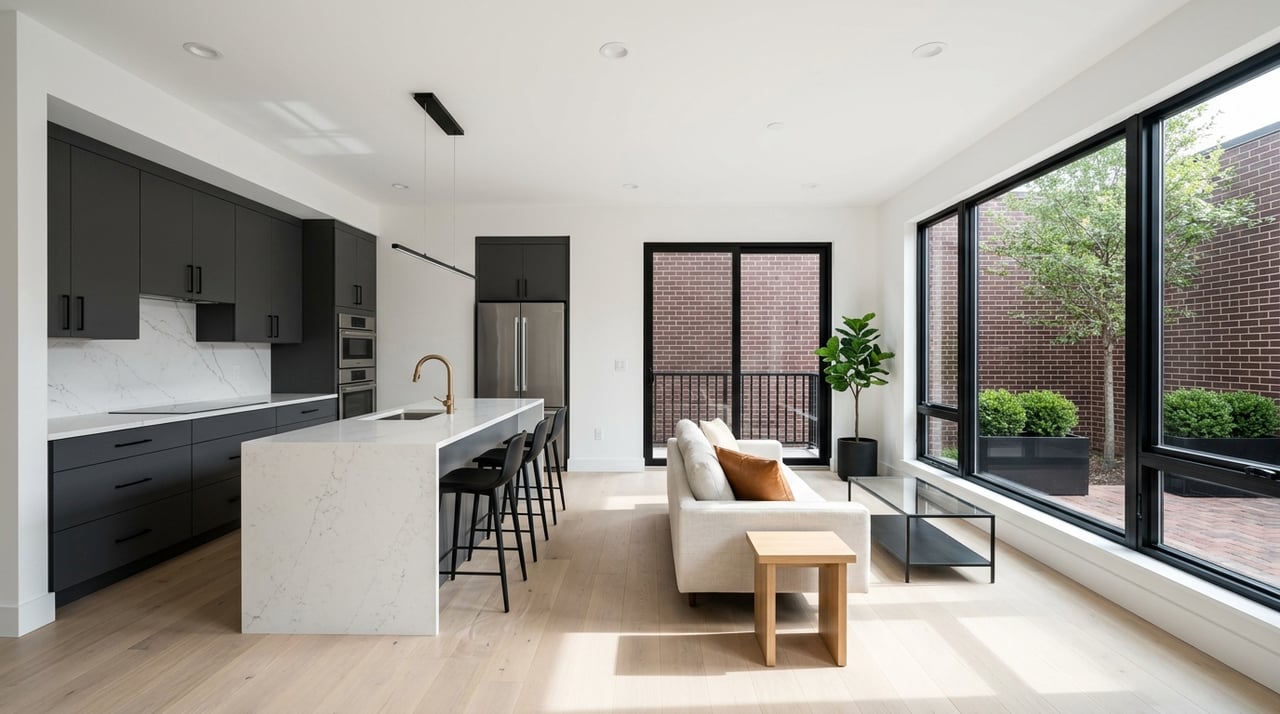
Thinking about buying brand-new in South End Charlotte? It is easy to get excited by sleek finishes, walkable streets, and quick access to rail and trail connections. But in South End, new construction is not just about the home itself. It is also about contract details, timing, transit projects, and understanding what you are really buying. If you want to move forward with more confidence, this guide will help you know what to ask, what to watch, and how to plan ahead. Let’s dive in.
Why South End attracts buyers
South End stands out because it blends urban convenience with a strong pedestrian and transit network. Charlotte Center City Partners describes the area as a short distance from Uptown, with breweries, coffee shops, galleries, murals, and varied retail. That everyday convenience is a big reason many buyers look here first when they want a more connected lifestyle.
The neighborhood is also shaped by the Rail Trail and the LYNX Blue Line. The City of Charlotte and CATS note that South End has grown dramatically since the Blue Line opened in 2007, and more transit improvements are still underway. In practical terms, that means buying new construction in South End often means buying into a neighborhood that is still actively evolving.
What makes new construction different
If you are comparing a resale condo with a newly built condo or townhome, the biggest differences often come down to the process. The Consumer Financial Protection Bureau points out that new construction decisions often hinge on contract terms, financing flexibility, selection deadlines, delivery timing, and warranty coverage. Those details matter just as much as floor plan and finishes.
That is especially true in South End, where location can be a major advantage, but timelines and nearby infrastructure work can add moving parts. A home may look turnkey on paper while still involving builder paperwork, deposit rules, and future completion targets that need careful review.
Know the transit story before you buy
South End’s transit access is one of its biggest strengths, but it is smart to look at both the current benefits and the short-term tradeoffs. According to CATS, the South End Station project will add a new light-rail stop, a track crossing, a new Rail Trail segment, and improved sidewalks. Construction is already underway, with track and systems work expected from spring 2026 through spring 2027 and testing targeted for 2028.
For you as a buyer, that means a project near the corridor may offer excellent long-term connectivity, but you should also ask about current construction impacts. Street work, trail detours, and transit disruptions could affect your move-in timing, commute, or day-to-day routine in the short term.
Understand North Carolina due diligence
In North Carolina, the due diligence period is your main window to investigate the property and the deal. The North Carolina Real Estate Commission says buyers can use this time to inspect the property, review restrictive covenants, verify zoning, check insurance and flood risk, obtain an appraisal and survey, and complete loan approval work.
This period matters because you can typically terminate for any reason or no reason before it expires. But the due diligence fee is usually negotiated, paid to the seller, and generally nonrefundable. That is why deadlines are so important, especially in a new construction purchase where inspections, financing, and builder documents can all move on different timelines.
Due diligence fee vs earnest money
These two costs are easy to confuse, but they are not the same. NCREC explains that after the due diligence period ends, earnest money is usually the amount most at risk if you walk away. Before that point, your due diligence fee is generally the piece you should assume is already committed.
When you are buying new construction, you may also be asked for a separate builder deposit. The CFPB recommends asking exactly when that deposit can be returned and under what conditions. Do not assume all deposits follow the same rules.
Read the builder contract carefully
A common mistake is assuming a builder contract works like a standard resale offer. It often does not. NCREC notes that new-construction contracts are distinct from the usual resale form, which means deadlines, addenda, and builder protections may be different from what you would expect in a resale transaction.
That is one reason representation still matters, even if you first visit a sales center on your own. A clear review of deadlines, upgrade terms, deposit language, and completion timing can help you avoid surprises later.
Questions to ask before signing
Before you commit money, ask for clear answers to questions like these:
- What is included in the base price?
- What counts as an upgrade?
- When do design selections have to be finalized?
- How much deposit is required?
- Is any part of the deposit refundable?
- What happens if the completion date changes?
- Is the certificate of occupancy available yet?
- Are any permits still open?
- What warranty coverage is included?
- How are warranty claims submitted?
- What are the HOA or condo dues?
- What restrictions or rules apply to the property?
These questions line up with the issues official guidance says buyers should investigate during due diligence and before closing.
Do not rely on disclosures alone
With a never-occupied new home in North Carolina, you may not get the same kind of disclosure package you would expect in a resale transaction. NCREC explains that the state’s residential disclosure statement has limited exemptions, including new home construction that has never been occupied.
That does not mean you should skip your own verification. NCREC also stresses that a disclosure is not a warranty and should not replace inspections. For a new condo or townhome in South End, the real answers often come from the contract, inspections, permit record, and builder warranty.
Check permits and the certificate of occupancy
Before closing, make sure you understand the project’s permit and occupancy status. According to NCREC, the certificate of occupancy confirms that required permits were obtained, the work was inspected during construction, and the structure complies with building code.
If the certificate of occupancy is not available yet, that should be disclosed, and you should receive it at or before closing. This step is especially important in South End projects where completion dates, lender timelines, and move-in plans may not line up perfectly.
Look closely at warranty coverage
A builder warranty can be valuable, but it is important to know what it actually covers. The Federal Trade Commission explains that builder warranties often include limited coverage on workmanship and materials for about one year, systems coverage for about two years, and sometimes up to 10 years for major structural defects.
The FTC also notes that a home warranty is different. A home warranty is generally a separate service contract that costs extra. You should also check whether the builder’s warranty requires mediation or arbitration, and learn exactly how claims must be submitted before any issue comes up.
Budget for the full monthly cost
In South End, the monthly payment is rarely just principal and interest. The CFPB reminds buyers to factor in property taxes, insurance, and homeowners association dues. For condos and many townhomes, those HOA or condo fees can be a meaningful part of your monthly budget.
Beyond cost, association rules can affect how you use the property day to day. Before you buy, make sure you understand the dues, what they cover, and any rules that may affect parking, exterior changes, shared spaces, or general property use.
Compare lender incentives carefully
Builders often promote preferred lenders and special incentives. Sometimes those offers are helpful, but they should be reviewed as a full package. The CFPB says buyers do not have to use the builder’s associated lender and can shop around.
If a lender credit or closing-cost offer sounds appealing, compare it alongside the interest rate, fees, contract terms, and overall flexibility. The best deal is not always the one with the biggest headline incentive.
Why buyer representation still helps
You might wonder whether you need your own agent when the builder has a sales team on site. The short answer is yes, it can still make a real difference. CFPB advises buyers to understand who the agent represents and to choose someone with strong experience in the neighborhood and property type.
In a South End new-construction deal, buyer representation can help you compare contract terms, track due diligence deadlines, ask about permit and CO status, and keep the focus on both lifestyle and risk. That kind of guidance fits especially well if you are relocating, buying your first home, or trying to balance walkability with a realistic timeline and budget.
Common pitfalls to avoid
A few mistakes show up again and again in new-construction purchases. In South End, these are some of the biggest ones to watch:
- Assuming the builder’s lender is required
- Letting due diligence expire before inspections or reviews are complete
- Relying on a disclosure statement for a never-occupied new home
- Overlooking current transit construction near the project
- Focusing only on finishes instead of contract timing and deposit terms
- Forgetting to verify HOA dues, rules, permits, or CO status
When you avoid these issues, you give yourself a better shot at enjoying the upside South End offers: strong connectivity, walkability, and a neighborhood that continues to grow around rail, trail, and mixed-use convenience.
Final thoughts on buying in South End
Buying new construction in South End Charlotte can be a smart move if you love the area’s energy, transit access, and evolving urban lifestyle. The key is to look beyond the model unit and understand the contract, timeline, warranty, and infrastructure story around the property. When you do that, you can make a decision that fits both your day-to-day life and your long-term goals.
If you want a local, thoughtful guide as you compare South End new construction options, Jonathan Winn is here to help you sort through the details and move forward with confidence.
FAQs
What should you ask when buying new construction in South End Charlotte?
- Ask what is included in the base price, what counts as an upgrade, when selections lock, how deposits work, whether the certificate of occupancy is available, what warranty coverage is included, and what HOA dues and rules apply.
How does due diligence work for new construction in North Carolina?
- Due diligence is your investigation period to inspect the property, review documents, confirm zoning and insurance issues, complete financing work, and decide whether to proceed before the deadline expires.
Is the builder’s lender required for a South End new construction home?
- No. CFPB says buyers do not have to use the builder’s associated lender, so it is wise to compare any incentive offer against other loan options.
Why does the certificate of occupancy matter in a new South End condo or townhome?
- The certificate of occupancy confirms the property was properly permitted, inspected during construction, and approved for code compliance, which is important before closing and move-in.
What transit issues should buyers consider in South End Charlotte right now?
- Buyers should consider ongoing South End Station construction, including possible short-term impacts like sidewalk changes, trail detours, single-tracking, or rail disruptions while long-term transit access improves.
